Last updated September 15, 2026
Surreal eye drawings captivate us by merging anatomical precision with the logic of dreams. This guide explores eight essential techniques, from celestial irises to symbolic reflections, based on research from UC Berkeley Vision and historical surrealism. We examine how these artistic visions influence everything from fine art to modern independent designer frames.
Table of contents
- 1. Transform the iris into a celestial portal by replacing the pupil with a landscape or sky.
- 2. Incorporate memento mori symbolism by reflecting a skull within the pupil.
- 3. Utilize the ‘Third Eye’ motif to represent cosmic rays and divine wisdom.
- 4. Displace the eye by drawing it within the palm of a hand for a ‘seeing touch’ effect.
- 5. Experiment with ‘C-Stunner’ eyewear styles to create a cyborg-inspired surrealist look.
- 6. Apply a ‘melted’ aesthetic to the eye to represent the fluid nature of time and memory.
- 7. Use muted tones and blurred details to simulate visual impairments for emotional weight.
- 8. Draft the eye using only charcoal and ink to emphasize stark contrast and shadow.
- Translating Surrealism into Personal Style
- Maintaining the Clarity of Your Artistic Vision
- Frequently asked questions
1. Transform the iris into a celestial portal by replacing the pupil with a landscape or sky.
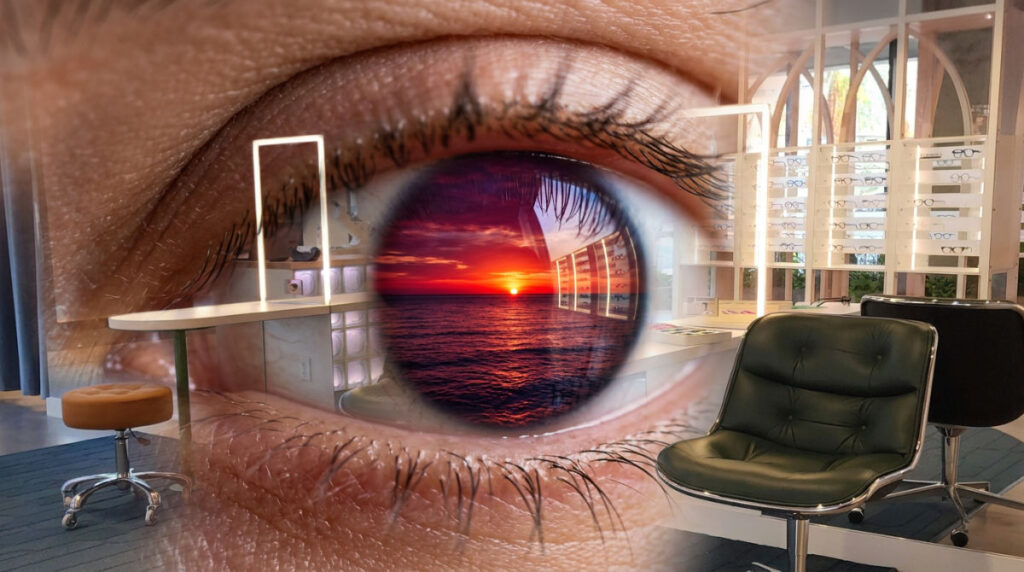
René Magritte’s "The False Mirror" (1929) replaces the iris with a cloud-filled sky. It forces the viewer to wonder if the eye is looking out or reflecting back. This iconic work serves as a masterclass in the portal concept. The eye acts as a boundary between the subjective self and the external world. When drafting your own surreal eye drawings, use the sclera (the white of the eye) as a framing device for vast environments. This creates a sense of internal infinity within a rigid anatomical structure. According to UC Berkeley Vision, artists often employ these techniques to encourage a shift in perspective. To execute this, ensure the edges of your landscape follow the natural curvature of the eyeball. Precision is key. This maintains the "lie" of the drawing, making the impossible sky feel like a physical part of the body. Blending realistic textures with impossible scenery creates a tension foundational to the surrealist movement.
2. Incorporate memento mori symbolism by reflecting a skull within the pupil.
M.C. Escher famously used a convex shaving mirror to draw his own eye in 1946. He placed a skull in the center of the pupil to represent the inevitability of death. This approach forces the viewer to confront mortality directly. It suggests the eye is literally witnessing its own eventual end. Achieving this requires high-level reflection work. You must account for the distortion caused by the cornea’s curved surface. In surrealism eye drawing, the pupil is rarely just a black hole. It is a canvas for hidden truths. Focus on how light hits the wet surface of the eye while keeping the skull reflection sharp enough to be recognizable but warped enough to fit the lens’s physics. This technique adds a layer of philosophical weight to your art, moving it beyond simple portraiture into conceptual storytelling. At EYE EYE, we believe that maintaining the clarity of your own sight is essential to appreciating these fine, intricate details in historical lithographs and modern sketches alike.
3. Utilize the ‘Third Eye’ motif to represent cosmic rays and divine wisdom.
Sacred art at the Swayambhunath Stupa in Nepal features a third eye placed above the traditional two as a symbol of spiritual oversight. Incorporating this into surreal eye drawings shifts the focus from literal human anatomy to spiritual abstraction. To do this effectively, draw cosmic rays or geometric light patterns emanating from this central point to convey a message of enlightenment. The third eye doesn’t have to look human. It can be stylized with sharp, symbolic lines or glowing gradients. It can even be a floating orb. This technique allows you to play with symmetry and facial proportions, breaking the rules of biology to suggest a higher state of consciousness. By blending ancient religious motifs with modern surrealist shading, your work bridges the gap between the physical world and the metaphysical.
4. Displace the eye by drawing it within the palm of a hand for a ‘seeing touch’ effect.
This classic surrealist trope merges the primary senses of sight and touch into a single visual experience. The imagery suggests an increased awareness or a tactile way of experiencing the surrounding visual world, famously explored in various Pinterest art communities. To make this impossible anatomy feel grounded in reality, focus on the realistic skin folds where the hand and eyelid meet. The challenge lies in the transition. The eye should not just sit on top of the skin but appear to grow from within the palm. Use fine lines to show the tension of the skin stretching around the socket. This displacement creates a visceral reaction in the viewer, as it triggers the brain’s sensory processing in conflicting ways. It is a powerful method for illustrating "hyper-awareness," where every movement and touch is observed by an internal, unblinking gaze.
5. Experiment with ‘C-Stunner’ eyewear styles to create a cyborg-inspired surrealist look.
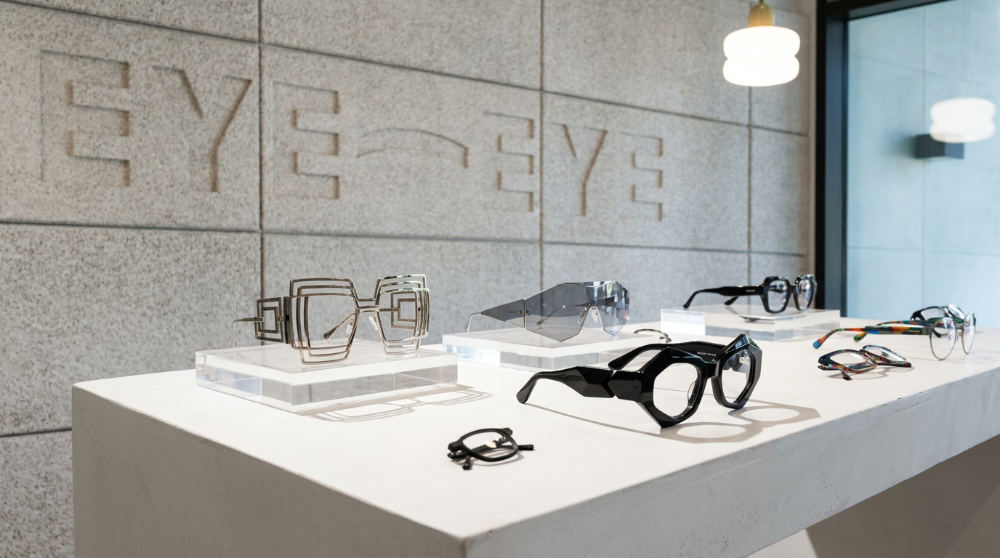
Some artists utilize found objects to create sculptural eyewear that transforms the wearer’s face into a piece of art. Drawing eyes behind industrial or recycled materials creates a dialogue between natural vision and technological intervention. This provides a modern, Afrofuturist take on traditional surrealist eye motifs, turning eyewear into a tool for self-expression rather than just a medical necessity. When sketching this, focus on the contrast between the organic iris and the cold, hard edges of the frames. This interplay reflects how we see the world through different lenses, both literal and metaphorical. At EYE EYE, we champion this intersection of art and optics by offering a curated collection of independent designer frames, which function as wearable surrealist art. Much like these sculptural works, these frames challenge traditional facial symmetry, allowing you to project an avant-garde persona while our personalized eye care ensures your biological vision remains sharp enough to appreciate every sculptural detail.
6. Apply a ‘melted’ aesthetic to the eye to represent the fluid nature of time and memory.

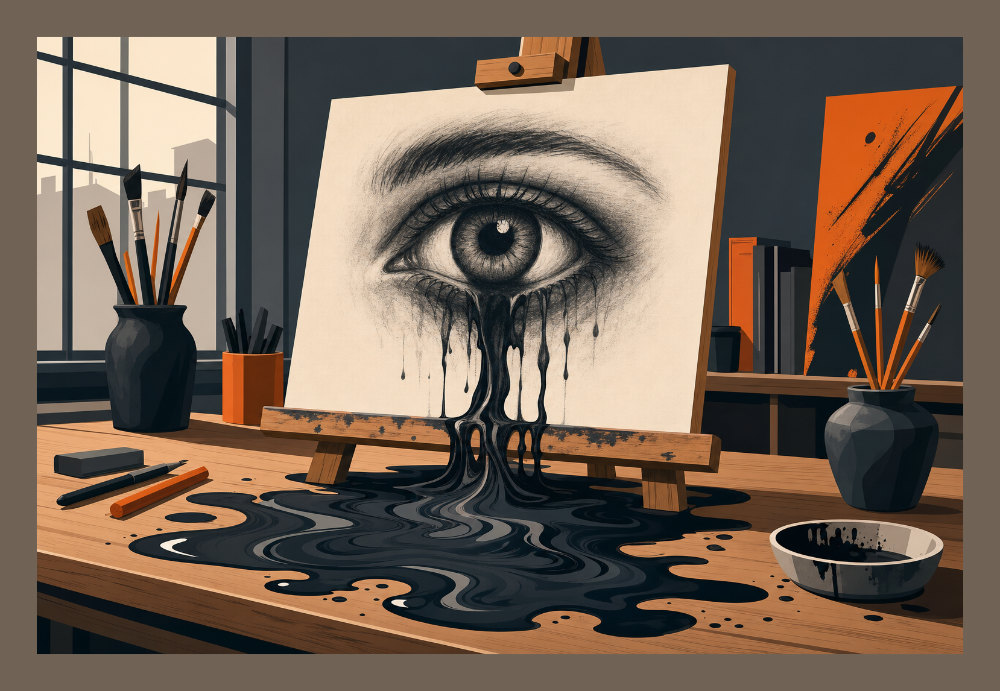
Distorting the round shape of the eyeball into a drooping or flowing form echoes the classic surrealist preoccupation with the plasticity of reality. By using ink washes or careful charcoal smudging, you can give the eye a liquid-like quality that appears to drip off the page. This technique is highly effective for expressing concepts of grief, the passage of time, or the fading of mental clarity. Scientific reviews of art indicate that surrealist works often use these distortions to represent the fluid nature of the human subconscious and its influence on physical perception. When the rigid structure of the sclera dissolves into a puddle, it signals that the vision being presented is unstable or dream-driven. This fluid aesthetic challenges the permanence of sight. It suggests that what we see is often filtered through the shifting tides of our own memories and emotions rather than objective truth.
7. Use muted tones and blurred details to simulate visual impairments for emotional weight.
Surrealism is not always about hyper-clarity. Sometimes the most powerful statements come from what is obscured. Purposely blurring the details of an eye drawing can communicate a struggle for truth or a loss of personal focus. Historical examples show that physiological changes can dramatically alter artistic output. For instance, Claude Monet’s later works were heavily influenced by his cataracts, which changed his perception of color to muted browns and caused a significant loss of fine detail. By simulating such impairments in your art, you can create a piece that feels intimate, internal, and subjective. The lack of vibrant color paradoxically draws the viewer closer, forcing them to engage with the feeling of the image rather than its technical precision. This approach turns a biological limitation into a surrealist tool, highlighting how the internal health of the eye dictates the external expression of the artist.
8. Draft the eye using only charcoal and ink to emphasize stark contrast and shadow.
High-contrast drawings strip away the distraction of color to focus entirely on the awareness and observation of the subject. Using deep blacks in the pupil and sharp, white highlights in the cornea creates a piercing gaze that demands immediate viewer engagement. This method is ideal for evoking the inner, subjective self, a concept that surrealists like Man Ray explored throughout their careers. Artists working within this movement understood that shadow and light could define the soul of an image better than a full palette. By emphasizing the contrast between the dark pupil and the bright reflections on the surface, you mimic the way the eye physically processes light while creating an atmosphere of mystery. The starkness forces the viewer to confront the gaze directly.
Translating Surrealism into Personal Style
Surrealist eye art teaches us that vision is more than just sight (it is a profound form of self-expression). You can bring this aesthetic into your daily life through eyewear that functions as wearable art. The way we frame our eyes says as much about our inner world as the drawings we create. Choosing a frame that defies standard expectations is a way to bridge the gap between fine art and daily function.
At EYE EYE, we offer a curated collection of independent designer frames, which reflect the same bold spirit found in these surrealist drawings. Our team understands that your eyewear should be as unique as your perspective. Personalized styling services at specialized clinics can assist in identifying distinctive pieces from independent designers that act as sculptural extensions of a person’s identity. These independent designers often experiment with asymmetry, raw textures, and architectural silhouettes, much like the artists who pioneered the surrealist movement. By selecting frames that challenge the norm, you turn your own face into a canvas, reflecting a modern, avant-garde vision to the world every day.
Maintaining the Clarity of Your Artistic Vision
To appreciate the fine details of surrealism, maintaining the health of your eyes is essential. Physiological changes can dramatically alter how you perceive color and detail. As noted in the case of Claude Monet, the development of cataracts can shift a vibrant palette into muted, muddy tones, fundamentally changing an artist’s relationship with their work until medical intervention restores clarity. Protecting your vision ensures that the portal through which you view the world remains clear and vibrant.
At EYE EYE, we use advanced diagnostic technology to help maintain the clarity of your vision so you can continue to find inspiration in the world around you. Clinical excellence is the foundation of artistic appreciation. Regular eye exams are not just about checking a prescription. They are the primary way to ensure you can see well and maintain the health of your retina and lens. By combining state-of-the-art medical care with an appreciation for bold aesthetics, we help you protect the very tools you use to create and enjoy art. Ensuring your eyes are healthy allows you to continue exploring the fascinating intersection of art and health for years to come.
Frequently asked questions
What does surreal eye drawing represent?
It often represents the eye as a portal between the inner subconscious and the external world. These drawings can symbolize hyper-awareness, spiritual enlightenment, or the fragility of human perception by placing the eye in impossible contexts.
How does surrealism differ from abstract eye art?
Surrealism uses recognizable, often hyper-realistic elements in dreamlike or impossible combinations to tell a story. Abstract eye art focuses on shapes, colors, and forms that may not represent the eye in a literal or anatomical sense.
Can wearing unique designer frames be considered a form of surrealist expression?
Yes, many independent designers create frames that challenge traditional facial symmetry and aesthetics. Choosing eyewear that acts as wearable art allows individuals to project a surrealist or avant-garde persona while highlighting their natural features.
Where can I find surreal eye art for my home?
Local galleries in San Diego and online platforms like Pinterest often feature these motifs. Searching for independent artists who specialize in aesthetic eye drawings or surrealism can yield unique, non-mass-market pieces that reflect your personal taste.
If you are ready to enhance your perspective with high-quality care and unique frames, we invite you to call us at 619-815-5864 and find directions to visit our showroom at 2765 Fifth Ave Suite 15, San Diego, CA 92103. You can Appointments to experience our curated collection firsthand. Call us to learn how to SEE GOOD All the Time.