
Last updated October 24, 2026
Eye drops for dry eyes work by either supplementing your natural tear film or reducing evaporation. For effective relief, it is helpful to match the drop to your specific condition, Aqueous Deficient or Evaporative, while considering San Diego’s unique environmental factors, such as coastal winds and inland microclimates that may accelerate tear loss.
Table of contents
- Key takeaways
- Understanding the San Diego Dry Eye Environment
- Matching the Right Drop to Your Specific Condition
- Why Preservative-Free Artificial Tears are the Professional Choice
- Beyond the Drugstore: Prescription Options and Advanced Care
- 1. Consult an eye doctor in San Diego for a diagnostic assessment
- 2. Select a preservative-free drop based on your tear deficiency
- 3. Shield your eyes with independent designer frames
- 4. Incorporate the Eye Spa for long-term ocular health
- Frequently asked questions
- Common mistakes people make
Key takeaways
- High Prevalence. Many patients show signs of Dry Eye Disease, yet fewer than half receive a formal clinical diagnosis.
- Formulation Matters. Preservative-free artificial tears in single-use vials are often recommended for long-term use and contact lens wearers to support the ocular surface without irritation.
- Lipid Support. Lipid-based drops are commonly used for those with Meibomian Gland Dysfunction (MGD) to help maintain the tear film and support against rapid evaporation.
- Diagnostic Priority. Advanced diagnostic technology at an independent eye doctor in San Diego can help identify your specific dry eye type before you spend money on ineffective OTC products.
- Environmental Shielding. Curated independent designer frames serve as a physical barrier to help protect eyes from the San Diego wind and allergens.
Understanding the San Diego Dry Eye Environment
San Diego residents face unique environmental challenges. Dry Santa Ana winds and coastal breezes in Bankers Hill often increase tear evaporation. While we enjoy beautiful weather, the mix of salt air and seasonal allergens frequently triggers secondary sensitivity on the ocular surface. Symptoms of dry eye often include a gritty sensation, redness, or blurry vision that fluctuates throughout the day, particularly after long hours of screen time.
Microclimates in San Diego CA mean that your indoor digital eye strain is often compounded by low humidity and outdoor allergens. If you spend your mornings hiking at Torrey Pines and your afternoons in a climate-controlled downtown office, your eyes are constantly working to maintain a stable tear film. Local experts at an eye care of San Diego practice can assess how your specific lifestyle impacts your ocular surface. At EYE EYE, we look at the whole picture to help you SEE GOOD All the Time.
San Diego Tip: The Santa Ana winds can drastically reduce humidity; San Diego residents may benefit from increasing drop frequency during these weather events to support eye comfort.
Matching the Right Drop to Your Specific Condition
Identifying the underlying factors of your discomfort is a helpful way to avoid the cycle of "trial and error" at the drugstore. Aqueous-deficient dry eye occurs when your lacrimal glands don’t produce enough water. This usually suggests the use of drops containing Sodium Hyaluronate for hydration. This ingredient is a humectant that helps the ocular surface maintain moisture for longer periods than standard saline-based lubricants.
Conversely, Meibomian Gland Dysfunction (MGD) is a common factor in evaporative dry eye where the oil glands in your eyelids are blocked, which may cause tears to evaporate too quickly. Even if you produce enough water, the lack of a protective lipid layer leaves the eye exposed. Lipid-based drops like Systane Complete PF use nano-droplet technology to support the oil layer of the tear film, as noted by Haas Vision Center. Identifying your specific type through advanced diagnostic technology at EYE EYE is a primary step toward finding lasting relief. It is generally recommended to start with a diagnostic scan before purchasing generic saline products.
Why Preservative-Free Artificial Tears are the Professional Choice
Standard multi-dose bottles often contain Benzalkonium Chloride (BAK). This is a preservative that can cause ocular surface irritation with frequent use. While BAK keeps the bottle free of bacteria, it can be harsh on the delicate cells of the cornea if applied many times a day. Preservative-free artificial tears are packaged in single-use vials to ensure purity and help maintain surface health during long-term daily management.
Practical Rule: If you are using drops more than four times daily, you may want to switch to a preservative-free formula to help maintain long-term surface integrity.
For those who wear contact lenses, preservative-free formulas are less likely to cause chemical buildup on the lens material. Transitioning to preservative-free options helps support the integrity of the cornea, especially for those with chronic Dry Eye Syndrome (DED). If you find your current routine lacking, you may need a more tailored approach to contact lens fittings to ensure your lenses aren’t the primary source of irritation.
Beyond the Drugstore: Prescription Options and Advanced Care
If OTC drops fail to provide relief, an eye specialist in San Diego may discuss prescription options like Cyclosporine (Vevye or Restasis) which may help support natural tear production. These medications work by addressing inflammation in the tear-producing glands over time. Miebo (perfluorohexyloctane) is a prescription option specifically designed to support the tear film for those with MGD, according to a 2024 Dry Eye Research Report.
At EYE EYE, we offer a specialized ‘Eye Spa’ that provides comfort by addressing gland blockage. These sessions focus on eyelid hygiene and supporting the meibomian glands to promote the natural flow of essential oils. Our ‘SEE GOOD All the Time’ philosophy integrates clinical dry eye management with curated independent eyewear craftsmanship to help protect your vision. By combining professional intervention with environmental protection, we address both the internal biology and the external stressors affecting your eyes.
1. Consult an eye doctor in San Diego for a diagnostic assessment
Avoid the ‘trial and error’ approach. Get a professional evaluation of your tear film quality. A clinical exam can determine whether your symptoms stem from low water production or a poor-quality oil layer. You should schedule an eye appointment in san diego to determine if your issues are aqueous or evaporative.
During your visit, mention specific local factors like Bankers Hill winds or your office’s air conditioning. We use advanced diagnostic technology to visualize your tear break-up time and gland structure. This data allows us to recommend a targeted protocol rather than a generic solution, which may save you time and money.
2. Select a preservative-free drop based on your tear deficiency
Purchase single-use vials if you plan to use drops more than four times a day to help protect your corneal health. If your diagnosis indicates an aqueous deficiency, check labels for Sodium Hyaluronate for intense hydration. This molecule helps keep the eye lubricated even in dry environments.
Alternatively, opt for lipid-containing drops if an exam confirms Meibomian Gland Dysfunction (MGD). These formulas usually appear "milky" because they contain oils designed to support the tear film. Using a drop that does not match your deficiency, such as using a basic saline drop for an oil deficiency, often results in temporary relief before symptoms return. Consulting a professional can help you select the most effective product.
3. Shield your eyes with independent designer frames
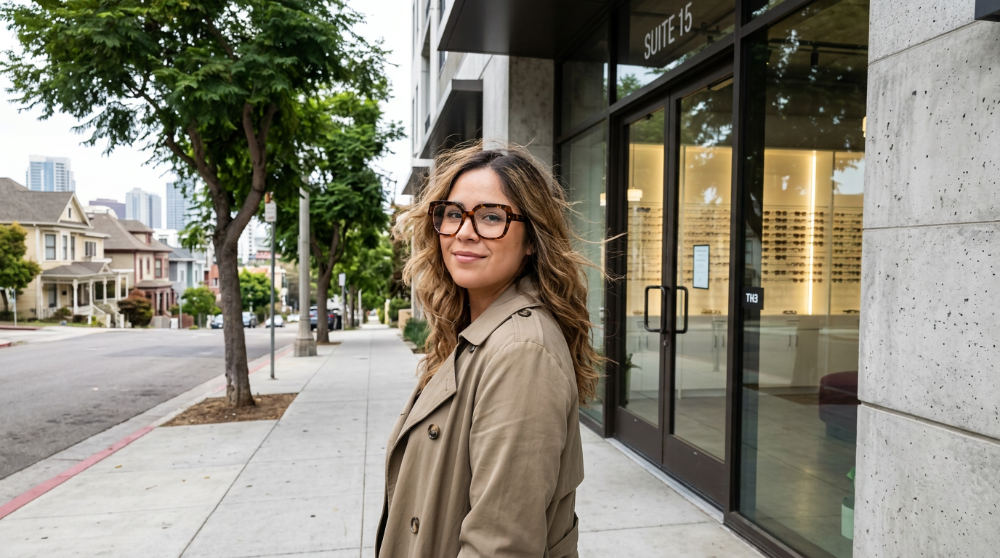
Select larger independent designer frames that provide a physical barrier against wind and dust. Specialized clinics that offer curated collections of designer eyewear can help patients find frames that provide a physical barrier against environmental irritants. In San Diego, the wind is a major factor in tear evaporation, especially for those who spend time outdoors. A well-fitted frame can act as a shield for your eyes, helping to maintain a pocket of humidity around the ocular surface.
Ensure a professional frame styling session to find a fit that helps minimize airflow around the eyes without sacrificing your personal aesthetic. We focus on high-quality materials to support skin comfort. You should also consider high-quality lens coatings that are compatible with your eye drop regimen to maintain clarity. Some coatings can smudge when they come into contact with lipid-based lubricants. We help you select the best eye doctor in san diego and styling team to balance these needs.
4. Incorporate the Eye Spa for long-term ocular health
Use heated masks or clinical eyelid hygiene to help maintain gland function between professional visits. Consistent home care is vital for supporting the meibomian glands. If these glands remain blocked for too long, their function may decrease over time, which can make dry eye symptoms more difficult to manage.
Ask about the EYE EYE Eye Spa sessions to complement your topical drop routine. These specialized sessions use therapeutic techniques to clean the eyelids and promote healthy tear film maintenance. Maintaining a consistent schedule of both home care and professional cleanings helps ensure that your eyes remain comfortable. You should be focusing on the beauty of San Diego rather than eye irritation.
Frequently asked questions
What are the best eye drops for chronic dry eye?
Preservative-free vials are generally recommended for long-term chronic use because they lack the chemicals found in multi-dose bottles that can lead to irritation. Drops containing lipids are commonly used if Meibomian Gland Dysfunction is present. You should consult an eye specialist in San Diego for a recommendation tailored to your specific tear film balance.
How can I tell if my symptoms are related to dry eye syndrome?
Common signs include burning, stinging, redness, and a gritty sensation. Blurred vision that improves after blinking is a common symptom, as it indicates an unstable tear film. Advanced diagnostic technology can help identify these issues even if your symptoms currently feel mild or intermittent.
Can I use dry eye drops while wearing contact lenses?
Yes, but you should prioritize preservative-free formulas to help avoid chemical buildup on the lens material, which can cause discomfort. Always check the packaging for ‘contact lens safe’ labeling before application. You may also benefit from professional contact lens fittings to ensure your lenses aren’t contributing to dryness.
Does the San Diego climate make dry eye symptoms worse?
Yes, the low humidity during Santa Ana winds can accelerate tear evaporation. Coastal winds in areas like Bankers Hill can also physically dry out the ocular surface. Additionally, local seasonal allergens often trigger secondary sensitivity, which may complicate existing dry eye conditions.
Are generic drugstore eye drops safe for designer lens coatings?
While generally safe for the eye, some generic drops contain additives that may leave residues on certain coatings. To help protect your investment in independent eyewear, stick to high-quality, doctor-recommended brands. You can ask your eye care provider at EYE EYE for a list of lubricants that are compatible with your lens clarity.
Common mistakes people make
Many people reach for "redness relief" drops when they feel dry. These drops often contain ingredients that constrict blood vessels but do not hydrate the eye, and they may lead to increased redness and dryness over time. Another common error is using generic multi-dose bottles more than six times a day, which exposes the eye to preservatives that may affect the corneal surface.
Finally, many residents assume their symptoms are only related to "allergies" and use antihistamines, which can actually contribute to eye dryness. Relying on professional assessment is often more effective than choosing products at the pharmacy without a diagnosis. For relief that addresses the underlying causes of your discomfort, a personalized exam is recommended.
To find a solution tailored to your lifestyle and tear chemistry, book your Appointments at our Bankers Hill office. Call us at 619-815-5864 or visit the location at 2765 Fifth Ave Suite 15, San Diego, CA 92103 to start your journey toward lasting comfort.
This information is for educational purposes only and does not constitute medical advice, diagnosis, or treatment. Please consult with a qualified eye care professional for your specific condition.