
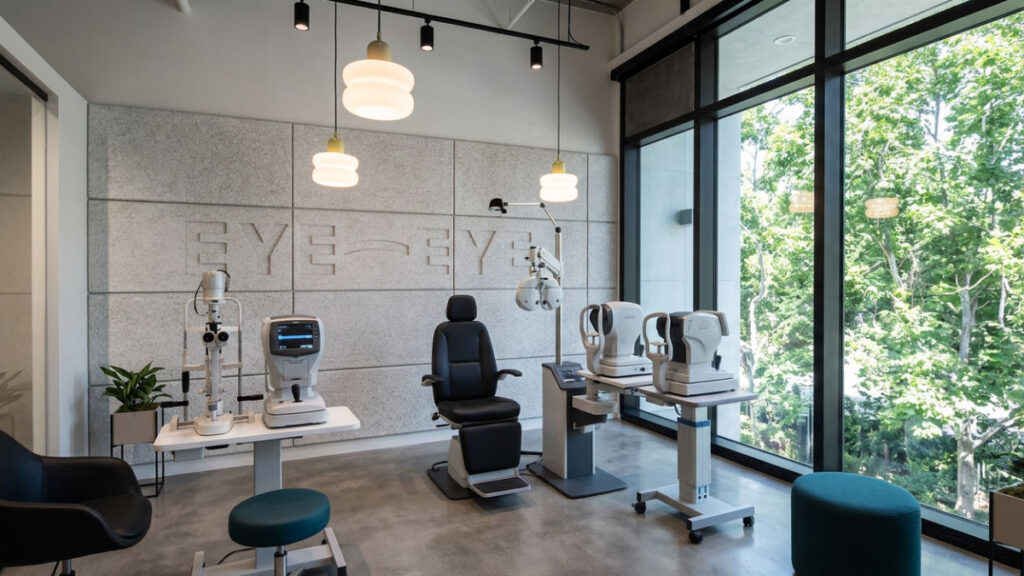
Last updated October 30, 2026
An astigmatism eye test is a specialized refractive assessment performed by an optometrist to measure how light bends as it enters the eye. Using tools like a phoropter and keratometer, the provider determines the specific irregular curvature of the cornea or lens to help develop a precise corrective prescription.
Table of contents
- Key takeaways
- Understanding Astigmatism as a Refractive Error
- How a Professional Astigmatism Eye Test is Performed
- The Impact of San Diego Dry Eye on Vision Testing
- Why Professional Diagnostics Outperform Home Screenings
- Monitoring Your Vision with San Diego Eye Care
- Frequently asked questions
Key takeaways
- Common prevalence. Approximately 1 in 3 people globally have astigmatism, making it a highly common refractive error.
- Dual measurement. Professional exams measure both corneal curvature and internal lens irregularities for a thorough assessment.
- Environmental factors. Dry eye symptoms in San Diego’s climate can often mimic or contribute to astigmatism-related blurriness.
- Advanced mapping. Digital mapping (topography) provides a depth of data that basic online charts cannot replicate.
- Customized optics. Custom measurements support the proper fit of independent designer frames and specialty lenses.
Understanding Astigmatism as a Refractive Error
Astigmatism happens when the cornea or internal lens has an irregular shape. In a perfectly spherical eye, light hits a single point on the retina. An asymmetrical curve can disrupt that process by scattering light. This condition is a refractive error. It means the eye does not focus light evenly, which may lead to blurred vision at various distances. You might notice streetlights look like smeared streaks at night or fine print might seem to have a "ghost" image behind it.
Most patients experience a combination of astigmatism with nearsightedness or farsightedness. General observations suggest that many glasses wearers require some degree of astigmatism correction. When we evaluate your eyes at EYE EYE, we look for two distinct types. Corneal astigmatism involves the clear front surface. Lenticular astigmatism is associated with the shape of the natural lens inside. Both are considered during a comprehensive list of eye tests.
A patient might have a spherical cornea but still experience blur. This can occur because the lens sitting behind the iris is tilted or shaped irregularly. A professional assessment is the standard way to identify these nuances. We believe independent care is an effective way to support your vision so you can SEE GOOD All the Time.
How a Professional Astigmatism Eye Test is Performed
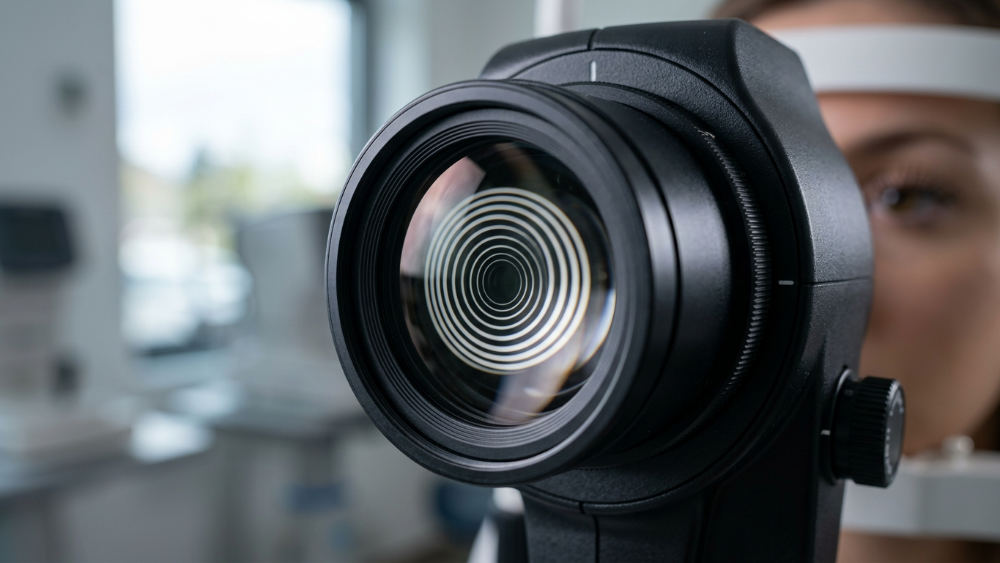
The diagnostic process typically begins with a keratometer. This instrument measures light reflections from the cornea to determine its curvature. It provides an objective starting point by calculating the steepness and direction of the corneal surface. During the professional eye examination procedure, we use a phoropter for manual refraction. You compare different lens strengths. This subjective part of the test is where you help us fine-tune the "axis." The axis is the specific degree where the correction is positioned.
EYE EYE uses diagnostic technology designed to reflect your lifestyle. We account for digital device use, glare, and local lighting conditions. Digital topography may be used to create a 3D map of the eye surface. This helps identify complex astigmatism that basic online environments might not detect. We also assess visual acuity using a Snellen chart and specific astigmatism dials. These dials look like a series of radiating lines to help ensure the correction is balanced across your field of view.
During the exam, you may look at a dial of black lines. If some lines look darker or sharper than others, it helps indicate the orientation of the astigmatism. Lenses are then rotated until the lines appear more uniform. This level of detail allows for the creation of a prescription intended to support visual comfort.
The Impact of San Diego Dry Eye on Vision Testing
San Diego Eye Health: The arid climate and coastal winds in San Diego can exacerbate dry eye symptoms, which often fluctuate and may influence the results of a standard vision test.
Environmental factors in Southern California often lead to dry eye in San Diego. This can impact the accuracy of an astigmatism test. A compromised tear film may cause light to scatter before it hits the cornea, potentially creating fluctuating blur. If your vision clears for a second right after you blink, you may be experiencing surface instability.
Addressing dry eye symptoms helps support a stable ocular surface. This helps ensure measurements reflect your vision needs. We screen for tear quality before refraction to help maintain the clarity of the resulting lens prescription. If the tear film is insufficient, the "map" taken of the eye may be less clear. Managing surface health is a core part of our philosophy.
Why Professional Diagnostics Outperform Home Screenings
Precision Matters: An accurate assessment is the foundation of the SEE GOOD All the Time philosophy, helping to ensure that lenses are positioned for your specific eye shape.
Online tests or printed dials can indicate a potential issue, but they are not a substitute for professional care. These tools generally do not account for the distance between your pupils or how your eyes work together. Professional diagnostics help differentiate between regular astigmatism and other conditions that require clinical attention. Independent practices provide personal care focused on the underlying causes of vision changes.
We pair a precise assessment with San Diego’s largest curated collection of independent designer frames. This helps ensure optics align with the frame’s geometry. When you choose a handcrafted frame, lens placement is important. Proper alignment supports visual performance in an astigmatic prescription. Moreover, toric designs for contact lenses are commonly used to help the lens stay stable on the eye. A comprehensive in-person exam is a reliable way to manage these factors.
Monitoring Your Vision with San Diego Eye Care
Regular monitoring is important as the shape of the eye can change over time. While corneal shape is often stable, the internal lens can change with age, which may alter astigmatism levels. Quality eye care involves looking at the overall health of the retina and cornea. Choosing an independent eye doctor allows for consistent care from a provider who understands your history.
Our approach focuses on precision and style. We want your eyewear to support your daily life, whether you are driving or working under office lights. Visit us in Bankers Hill for an evaluation that prioritizes your unique visual health. Seeing clearly is just the beginning; how you feel in your glasses is also a priority.
To experience a personalized approach to your vision, schedule a comprehensive evaluation with us. Our team is dedicated to helping you SEE GOOD All the Time. Call 619-815-5864 to book your appointment or visit our boutique in Bankers Hill.
Frequently asked questions
How is an astigmatism eye test performed?
It typically involves automated measurements using a keratometer or topographer to map the cornea’s shape. Afterward, a manual refraction using a phoropter allows you to compare different lenses, helping the optometrist determine the specific lens power and axis needed for your vision.
Can an optometrist detect astigmatism during a routine exam?
Yes, astigmatism is a standard component of a comprehensive vision health check. Optometrists use both objective light-reflection tests and subjective patient feedback to identify the irregular curvature of the eye.
Should I see an eye doctor in San Diego if I fail an online astigmatism test?
Yes, online tests are not diagnostic tools and may produce inaccurate results due to screen glare or improper calibration. A professional exam is required to evaluate the health of your cornea and provide an accurate prescription for corrective lenses.
Can addressing dry eye help if my vision feels blurry like astigmatism?
Yes, supporting a stable tear film can often help with "ghosting" or blur that feels like a refractive error. Because the tear layer is the first surface light hits, maintaining its health is often a key step in achieving comfortable vision correction.
How often should I have an eye care exam in San Diego to monitor astigmatism?
Most adults are encouraged to have a comprehensive exam every one to two years depending on their age, health, and visual demands. More frequent visits may be recommended by a professional if you wear contact lenses or notice changes in your vision.
Educational information only. Please consult with a qualified clinician for your specific eye health needs.