Last updated September 22, 2026
A comprehensive list of eye tests typically includes visual acuity, refraction using a phoropter, slit-lamp microscopy, and tonometry for glaucoma. These procedures allow optometrists to evaluate both your vision clarity and internal ocular health, identifying indicators for issues like hypertension or diabetes through retinal observation. Understanding the specific purpose of each diagnostic tool helps patients participate more actively in their own ocular wellness journey.
Table of contents
- Key takeaways
- Comparing Professional Eye Exams and Standard Screenings
- The Core Components of a Comprehensive Eye Examination
- Advanced Health Screenings and Glaucoma Detection
- The Bankers Hill Experience in San Diego
- When Standard Eye Tests May Not Be Enough
- From Clinical Results to Artisanal Frame Styling
- Which Eye Exam Should You Choose
- The Verdict on Ocular Health
- Frequently asked questions
Key takeaways
- Thorough evaluation. A standard comprehensive eye exam may include up to 13 distinct diagnostic components.
- Distance standards. Visual acuity results are expressed as a fraction where 20 represents the standard testing distance in feet.
- Systemic insights. Advanced diagnostic technology can identify indicators of systemic health conditions like high cholesterol and diabetes.
- Personalized care. Independent optometry practices offer more personalized testing and curated frame styling than corporate chains.
- Ocular Wellness. Regular eye exams are commonly used for monitoring long-term ocular health, even for those with 20/20 vision.
Comparing Professional Eye Exams and Standard Screenings
A professional eye exam differs from a basic vision screening by providing a full health assessment of both internal and external ocular structures rather than just measuring reading ability. A screening at a school or the DMV acts as a quick "pass/fail" check to identify obvious vision problems, but it lacks the advanced diagnostic eye technology required to support the detection of underlying concerns. According to the Cleveland Clinic, a comprehensive eye exam has as many as 13 distinct parts, ranging from orientation to gauging overall health.
Practitioners use specific tools to move beyond the surface of your vision. A screening might tell you that you need glasses, but it cannot explain why your vision is changing or if the blood vessels in your retina show signs of systemic issues. Independent practices focus on this depth, ensuring that every measurement contributes to a complete profile of your wellness.
| Test Type | Purpose | Equipment Used | Depth of Insight |
|---|---|---|---|
| Visual Acuity | Measures sharpness | Snellen Chart | Basic |
| Refraction | Determines prescription | Phoropter | Detailed |
| Tonometry | Checks eye pressure | Tonometer | Health Metric |
| Slit-Lamp | Examines eye anatomy | Binocular Microscope | Structural |
| Fundoscopy | Views the retina | Ophthalmoscope | Internal Health |
The Core Components of a Comprehensive Eye Examination
Visual acuity testing is the fundamental starting point of this process. The procedure measures how well you see at a distance by identifying characters on a chart. Beyond reading letters, the doctor performs a comprehensive physical evaluation of the eye’s anatomy to ensure all biological systems are functioning without interference.
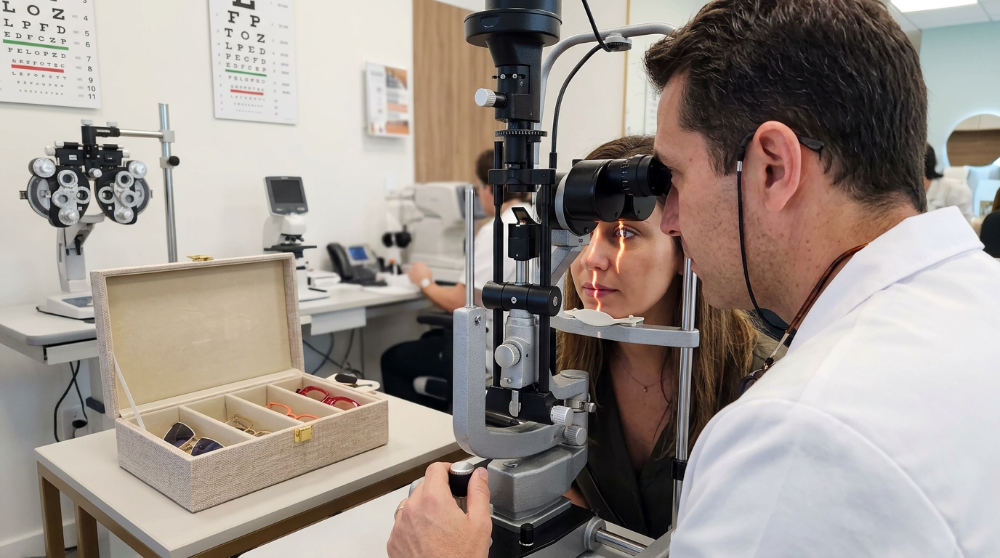
The foundation of a comprehensive exam lies in a series of targeted tests that evaluate how your eyes see, move, and function as a pair. Visual Acuity Testing is the most recognizable step. It uses the Snellen Chart to determine the smallest letters you can read at a distance of 20 feet. The American Optometric Association notes that these results are written as a fraction, where the top number represents the standard testing distance.
Beyond the chart, your doctor will perform a refraction test. During this phase, you look through a Phoropter (a device containing dozens of different lenses) to help the doctor fine-tune your final prescription. Some practitioners also use retinoscopy. This involves shining a light into the eye to observe the reflection off the retina, providing an objective estimate of your refractive error before you even provide feedback. This retinoscopy vs refraction comparison is important because it shows how your doctor validates your subjective answers with objective light measurements.
To ensure your eyes track and focus correctly, the exam includes cover tests and ocular motility evaluations. These check for misalignment or issues with the muscles that control eye movement. Finally, a Slit-Lamp examination uses a high-powered binocular microscope to provide a magnified, 3D view of your cornea, iris, and lens. This structural check is essential for identifying cataracts or corneal irregularities. These steps are vital for the comprehensive eye examination procedure that supports clinical precision and long-term clarity.
Advanced Health Screenings and Glaucoma Detection
Advanced diagnostics include testing for intraocular pressure and detailed imaging of the retinal nerve. By using these tools, a doctor can identify signs of silent conditions like glaucoma that do not produce noticeable symptoms in their early stages. These screenings transform a simple vision check into a detailed medical evaluation.
Clinical Fact: An eye exam can help identify indicators of systemic health conditions such as diabetes and hypertension by evaluating retinal blood vessels.
Advanced diagnostics allow us to look inside the eye to monitor signs of chronic health changes and pressure changes. Tonometry is a primary test used to measure intraocular pressure. It acts as a key indicator for potential optic nerve damage associated with glaucoma. Because glaucoma often presents no early symptoms, this tonometry glaucoma test is a critical safeguard for your long-term sight.
The back of the eye is just as important as the front. Ophthalmoscopy, also known as fundoscopy, allows the doctor to see the retina and the intricate network of blood vessels that feed it. Research highlighted by Optometrists.org indicates that evaluating these vessels can help identify signs of systemic issues like hypertension or high cholesterol. By observing how the blood moves through the retina, an optometrist can sometimes spot the first signs of these conditions.
For those requiring specialized care, Corneal Topography creates a detailed map of the surface curvature of the eye. This is commonly used for fitting specialized contact lenses or identifying conditions like keratoconus. At EYE EYE, we use these results to inform our specialized Eye Spa sessions for those experiencing chronic dryness, ensuring that we support the maintenance of ocular comfort.
The Bankers Hill Experience in San Diego
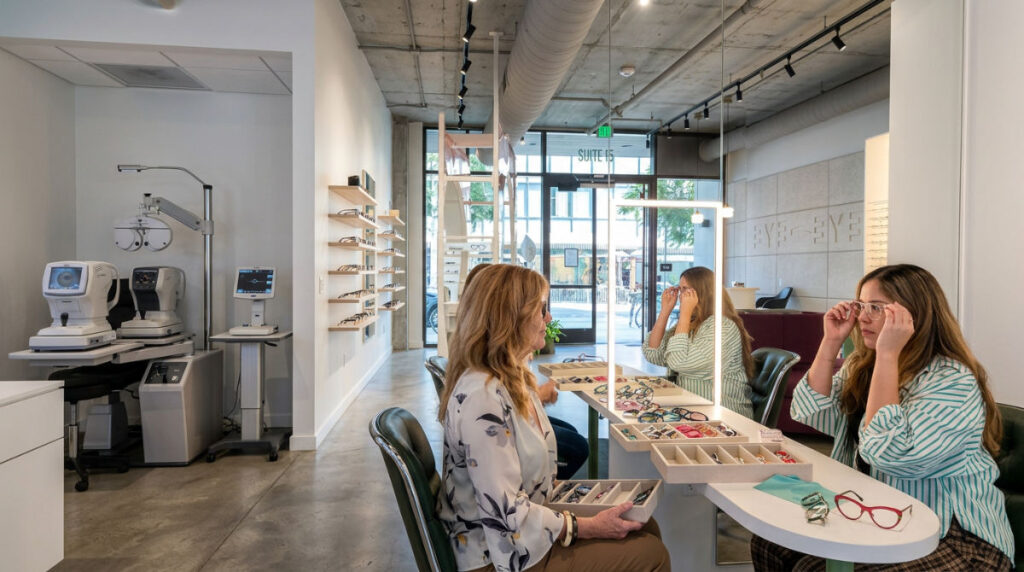
Our San Diego experience centers on blending boutique styling with clinical expertise in a relaxed, welcoming environment. We remove the clinical coldness of corporate optometry by focusing on personalized relationships and long-form examinations. This approach allows us to consider your visual needs within the context of your daily lifestyle and aesthetic preferences.
San Diego Tip: Independent practices in Bankers Hill offer a more personal touch than corporate chains, focusing on lifestyle-based frame styling.
Choosing an independent practice means opting for a "SEE GOOD All the Time" philosophy that blends clinical rigor with artistic styling. We take the time to understand your specific lifestyle, whether you spend ten hours a day in front of a screen or hike the trails around San Diego, before selecting diagnostic tools from our list of eye tests. This personalized approach helps ensure that your eye care is tailored to how you actually live.
For those looking for an appointment, we provide transparent boutique care that prioritizes the patient experience over corporate quotas. Our location in Bankers Hill is designed to be a comfortable, welcoming environment where medical accuracy meets high fashion.
We utilize a comprehensive selection of curated designer frames to match your unique clinical profile. By combining your medical data with our styling expertise, we can recommend frames that not only accommodate your lens thickness and weight but also reflect your personal aesthetic. An independent exam allows for this synergy between health and style that is rarely found in mass-market settings.
When Standard Eye Tests May Not Be Enough
Standard screenings often fail to account for the unique needs of different age groups and health backgrounds. Pediatric patients, for instance, require specialized targets and different testing frequencies compared to adults. A child may pass a school vision screening but still have underlying binocular vision needs that affect their ability to read or focus on schoolwork. Without a comprehensive exam, these developmental vision issues can go unnoticed.
Basic vision screenings at big-box retailers often skip the deep tissue health checks that help support early detection. If you only receive a refraction test, you are missing out on the full picture of your ocular wellness. For example, patients with existing conditions like diabetes may benefit from more frequent dilated exams to monitor vascular health. Basic screenings simply do not provide that service.
Consider a scenario where a patient has a mild headache and slightly blurred vision. A basic screening might suggest a small change in prescription. However, an advanced exam using a slit-lamp and tonometry might reveal elevated eye pressure or signs of inflammation that require professional management rather than just new glasses. Regular, detailed testing is the best way to monitor for small issues before they become more significant.
From Clinical Results to Artisanal Frame Styling
The final phase of your visit involves translating your complex test data into a tangible visual solution. Once the clinical portion of the exam is complete, we use your refraction results to help you explore curated designer frames that fit your face and your specific prescription requirements. A high prescription, for example, might be better suited for certain frame shapes or materials to ensure the finished glasses are lightweight and aesthetically pleasing.
World-class craftsmanship meets medical accuracy during our personalized styling sessions. We believe that your eyewear should be an extension of your personal style, not just a medical device. By looking at the measurements gathered during your exam, such as your pupillary distance and the bridge fit required for your facial structure, we can narrow down our collection of independent brands to the ones that will perform best for you.
This transition from the exam chair to the styling gallery ensures that the medical investment you made in your health results in a product you love to wear. Whether you are looking for bold, architectural frames or something classic and understated, the data from your eye tests informs every recommendation our stylists make.
Which Eye Exam Should You Choose
Choosing between a vision screening vs eye exam depends on whether you want a basic clearance or a full health diagnostic. While screenings check for major blurriness, only a comprehensive exam validates the physical integrity of the retina and optic nerve. For most adults, a full exam is the responsible choice for long-term health monitoring.
Opt for an independent practice in Bankers Hill if you want a personalized, non-corporate experience that supports your vision as part of your total wellness. Our team is dedicated to helping you SEE GOOD All the Time through expert care and exceptional eyewear. We combine the latest medical technology with a passion for independent design to ensure you leave our office seeing clearly and feeling confident.
Ready to experience the difference for yourself? Call us at 619-815-5864 or visit our location at 2765 Fifth Ave, San Diego, CA, 92103. You can also Appointments or contact us at info@eyeeyesd.com to start your journey toward better vision and unique style.
The Verdict on Ocular Health
A comprehensive list of eye tests is an excellent way to help ensure your vision remains stable and your eyes stay healthy. By combining standard refraction with advanced diagnostic eye technology, optometrists can identify signs of systemic issues and support the health of the eyes in cases of glaucoma. Regular testing provides the data needed for vision correction and the peace of mind that comes from a detailed health evaluation.
Frequently asked questions
What happens during a comprehensive eye exam?
A doctor reviews your health history and performs a series of tests including visual acuity and refraction. The exam includes a health check of the eye structures using a slit-lamp and tonometry. The results are used to determine your prescription and evaluate for potential health indicators that may not be apparent through vision alone.
Do eye exams check for health issues?
Yes, doctors can identify signs of diabetes, high blood pressure, and high cholesterol during an exam. The retina provides a direct view of your blood vessels, which serves as a window to your systemic health. By examining these structures, your optometrist can identify vascular changes that suggest underlying medical conditions.
Can I drive home after my eye tests if my pupils are dilated?
Dilation can cause light sensitivity and blurred vision for several hours as your eyes allow in more light than usual. Many patients feel comfortable driving with sunglasses, but we recommend bringing a driver if you are unsure or if it is your first time being dilated. Your safety and comfort are our primary concerns.
What specialized tests are used for dry eye support at an Eye Spa?
Clinics that offer specialized dry eye diagnostics may use meibography or tear film analysis to assess the quality and quantity of tears. These tools are commonly used to identify if there is a lack of moisture or an imbalance in the oil layer. These results help clinicians tailor Eye Spa sessions specifically to a patient’s needs.
Are eye tests still necessary if I have 20/20 vision?
Yes, because 20/20 vision only measures the clarity of your sight at a distance, not the internal health of the eye. Regular exams are a standard way to help identify asymptomatic conditions like early-stage glaucoma or retinal thinning, which can occur even if your vision feels clear.
This information is for educational purposes only and does not constitute medical advice, diagnosis, or treatment. Please consult with a qualified eye care professional regarding your specific health concerns.