Last updated September 19, 2026
This guide outlines the essential phases of a modern eye examination procedure, from initial health history to advanced retinal imaging. Based on standards from the American Optometric Association and Cleveland Clinic, we detail how these diagnostic steps support your vision health and inform the selection of your next pair of designer frames.
Table of contents
- 1. Discussing your systemic health history reveals hidden risks to your vision.
- 2. Retinal imaging or dilation enables a deep inspection of the back of the eye.
- 3. Automated refraction provides a high-precision digital baseline for your prescription.
- 4. Manual refraction allows you to fine-tune your final lens prescription.
- 5. Tonometry checks intraocular pressure to monitor for glaucoma risks.
- 6. A slit lamp examination provides a microscopic view of the eye’s physical structures.
- 7. Visual acuity tests measure the sharpness of your sight at multiple distances.
- 8. Visual field testing maps your peripheral vision to identify hidden blind spots.
- 9. Binocular vision testing evaluates how well your eyes coordinate and focus.
- How to Prepare for Your San Diego Appointment
- From Clinical Excellence to Artisanal Frame Styling
- Frequently asked questions
1. Discussing your systemic health history reveals hidden risks to your vision.
The first step in a thorough eye examination procedure involves a careful analysis of your medical background. We review your current medications and family history of conditions like diabetes or autoimmune disorders, which often manifest early warning signs in the eyes. This isn’t just paperwork. It’s a clinical conversation about how your daily environment and activities, such as prolonged screen use in a professional setting, impact your visual comfort.
"A comprehensive eye exam can include as many as 13 distinct parts, ranging from simple chart reading to complex imaging of internal tissues." — General Information
According to the American Optometric Association, this phase helps identify whether symptoms like eye strain or sudden blurriness are chronic issues or new developments. By understanding these systemic factors, an optometrist can better tailor the diagnostic process to your specific health risks. At EYE EYE, we use this time to connect your lifestyle needs to your vision outcomes, ensuring your care is as unique as your personal style. We believe a generic intake form is a disservice to your health. This foundation is critical for maintaining long-term wellness and supporting our "SEE GOOD All the Time" philosophy.
2. Retinal imaging or dilation enables a deep inspection of the back of the eye.
To truly understand what is happening inside your eyes, we must look beyond the surface. We use specialized drops to widen the pupil or employ advanced digital retinal photography. Widening the pupil allows significantly more light to reach the back of the eye, giving the doctor a clear view of the retina, optic disc, and internal blood vessels. Such an inspection is vital for detecting signs of systemic health conditions that might otherwise go unnoticed.
Digital imaging is particularly effective because it creates a permanent, high-resolution record. We prefer this method for its precision. It allows us to track subtle changes in your ocular anatomy over several years. At EYE EYE, we utilize advanced diagnostic technology to ensure these records are precise, helping us monitor potential issues early. This level of detail is a hallmark of an independent practice where we prioritize thorough, unhurried evaluations over the high-volume approach of corporate optical chains. High-volume shops often cut corners here. We don’t.
3. Automated refraction provides a high-precision digital baseline for your prescription.
Before the "which is better, one or two" phase begins, modern clinics use an autorefractor to gather objective data. This device measures how light changes as it enters your eye, providing an immediate and highly accurate estimate of your corrective needs. It also involves keratometry, which measures the curvature of the cornea. These measurements are essential for ensuring a proper fit if you decide to order contact lenses later. Data helps the doctor determine the best correction for your unique eye shape.
According to the Cleveland Clinic, this digital data is networked directly to the exam room, allowing your doctor to compare your current visual state against previous records instantly. Digital baselines save time and reduce the margin for error during the manual testing phase. For our patients in San Diego, this means a more efficient transition from clinical testing to the fun part: finding the perfect set of frames that match your new, precise measurements.
4. Manual refraction allows you to fine-tune your final lens prescription.
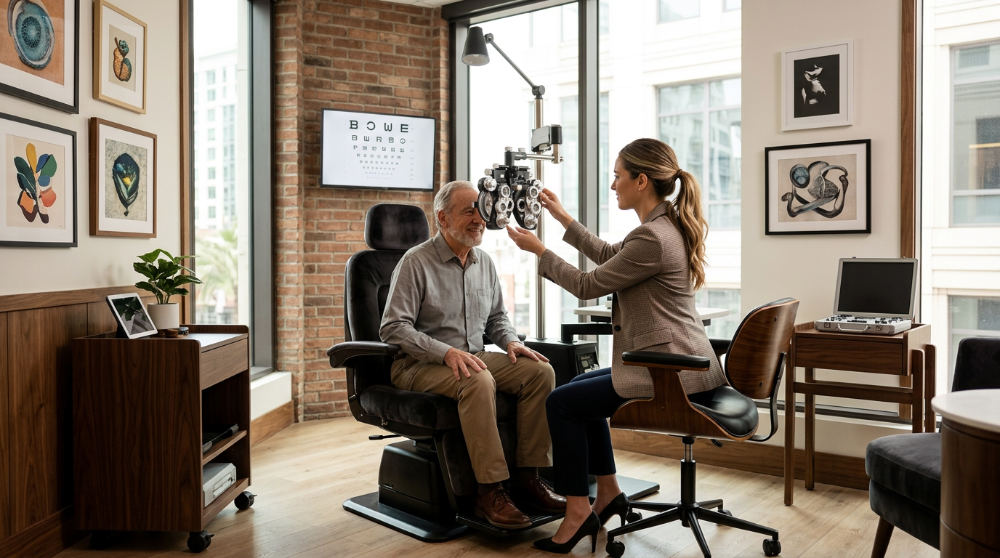
Digital tools give us a starting point, but your subjective input is what perfects the result. During manual refraction, the doctor uses a phoropter (a large instrument containing dozens of different lenses) to flip between various strengths while you provide feedback. This collaborative process determines the exact power required for you to achieve comfortable, clear sight. The refraction test is where your personal comfort meets clinical accuracy.
According to the Cleveland Clinic to Eye Tests, this step is necessary to account for astigmatism, an irregular curvature of the cornea, and to see how your eyes function together as a coordinated pair. Your unique visual preferences come to light here. You might need sharper distance vision for driving or a softer focus for digital work. Once your prescription is settled, you can schedule an eye appointment online in San Diego to move directly into our styling suite.
5. Tonometry checks intraocular pressure to monitor for glaucoma risks.
Monitoring the pressure inside your eyes is a non-negotiable part of a comprehensive exam. Tonometry measures intraocular pressure, typically using a non-contact method that involves a gentle puff of air against the eye’s surface. This resistance measurement helps identify if the pressure is within a healthy range. High pressure is a known risk factor for glaucoma, a condition that can damage the optic nerve if left unmanaged. Early detection is one of the most effective ways to support your sight.
Modern software now allows us to normalize these readings by factoring in your individual corneal thickness, providing a more nuanced view of your eye health. Regular pressure checks are one of the best ways to promote the long-term health of the optic nerve. Clinics providing these exams aim to make the process efficient and comfortable. Helping maintain healthy pressure is a key component of your vision care, allowing you to enjoy your vision for decades to come.
6. A slit lamp examination provides a microscopic view of the eye’s physical structures.
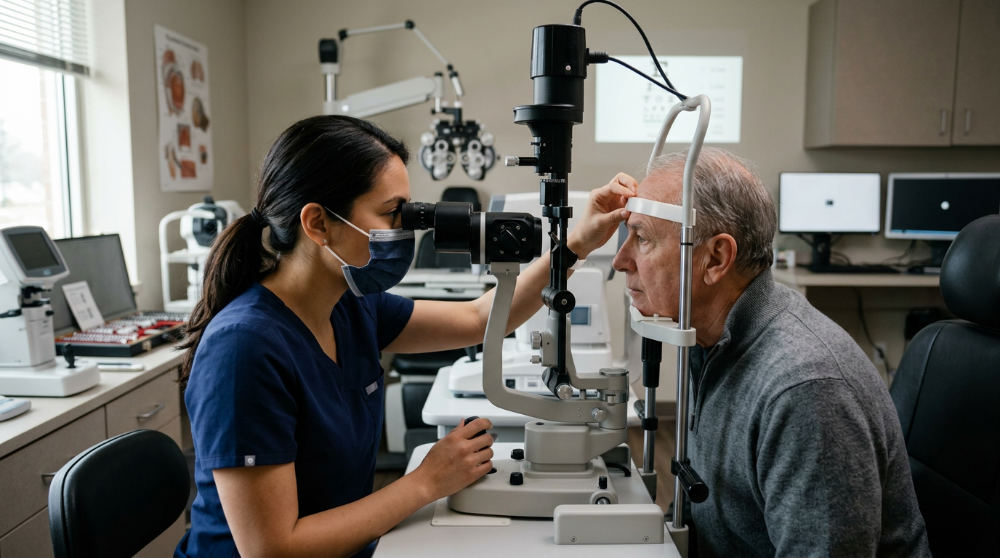
The slit lamp is essentially a powerful binocular microscope paired with a high-intensity light source. During this part of the eye examination procedure, the doctor examines the eyelids, cornea, iris, and the lens. It is a vital tool for checking the physical integrity of the eye and looking for signs of clouding, which may be associated with cataracts. A professional uses this light to see deep into the internal ocular architecture.
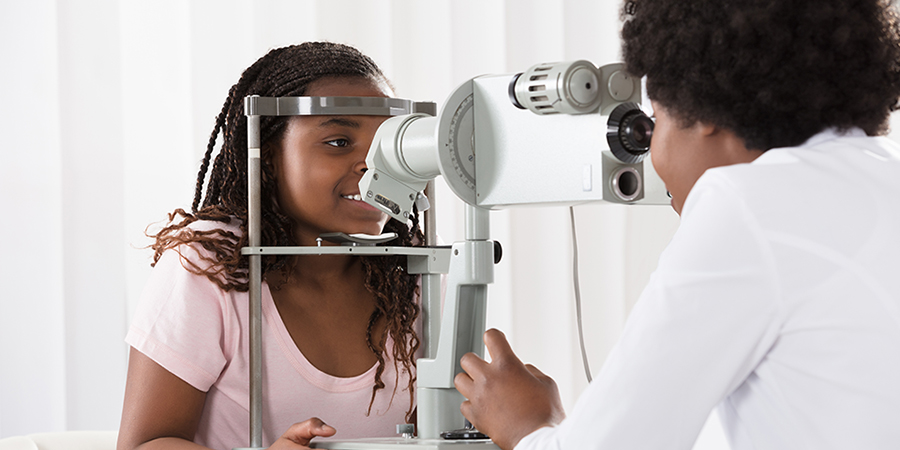
Image source: aoa.org
The slit lamp stage is noninvasive but absolutely essential for identifying structural health issues that a standard vision screening might miss. Because the light can be focused into a thin slit, the doctor can view the different layers of the eye in cross-section. Microscopic detail ensures every part of your eye is functioning correctly. At our Bankers Hill practice, we take the time to explain these physical findings to you, ensuring you leave your appointment with a full understanding of your ocular health.
7. Visual acuity tests measure the sharpness of your sight at multiple distances.
Visual acuity is the most recognizable part of the exam, involving the classic Snellen chart. You will be asked to read rows of letters that get progressively smaller to determine the clarity of your vision. Results are typically expressed as a fraction, such as 20/20, which the American Optometric Association on Comprehensive Eye Exams notes represents the standard 20-foot testing distance. We perform these tests both with and without your current glasses. We want to see the exact delta.
Comprehensive exams also evaluate near-vision performance using specialized reading charts. This is essential for the heavy digital device use common in San Diego’s professional sectors. Accurate acuity testing helps ensure your final prescription provides crisp vision whether you are looking at a horizon or a smartphone. If your acuity has decreased, the doctor will look for the underlying cause to ensure no secondary conditions are developing.
8. Visual field testing maps your peripheral vision to identify hidden blind spots.
A visual field test is designed to map your peripheral (side) vision. This is crucial because many vision-threatening conditions begin by eroding the edges of your sight rather than the center. During this test, you fixate on a central target while small light signals appear in different areas of your peripheral view. You signal whenever you see a light, allowing the doctor to create a map of your entire field of vision. This map reveals the health of your neurological pathways.
Unexpected results or blind spots in this map can indicate issues within the retina or even along neurological pathways. This diagnostic tool is a major differentiator between a basic screening and a comprehensive clinical exam. By checking that your peripheral vision is intact, we help maintain your safety and situational awareness in everyday life. Regular testing can identify changes in peripheral awareness, which is key for determining necessary lifestyle adjustments or monitoring health over time.
9. Binocular vision testing evaluates how well your eyes coordinate and focus.
Binocular vision testing focuses on eye teaming, or the ability of your eyes to work together as a synchronized pair. Optometrists may use accommodation tests to evaluate how the eyes change focus between near and distant objects. Proper coordination helps support comfort and helps maintain focus during long periods of reading. Testing for binocularity is essential for maintaining comfort in our visually demanding world, especially for those working long hours on computers.
If your eyes are not teaming correctly, it can lead to chronic headaches and significant eye strain. Once we confirm your eyes are working in harmony, we can finalize your prescription. This ensures that when you choose independent designer frames in our collection, your new eyewear provides not just style, but the highest level of functional comfort. Our optometrists work diligently to ensure your vision is balanced for all your daily tasks.
How to Prepare for Your San Diego Appointment
Preparation is key to a successful visit. Before you arrive, gather your current glasses and a copy of your most recent contact lens prescription. It is also vital to prepare a list of all current medications and supplements, as these can affect tear production and eye pressure. If you are a new patient, consider arriving 15 minutes early to discuss your lifestyle needs with our team and ensure we have all necessary insurance information ready. This allows for a smooth check-in process at our Bankers Hill office.
Being prepared helps the optometrist tailor the exam to your specific needs. For example, if you spend eight hours a day on a computer, we can adjust our testing to address digital eye strain. If you wear contact lenses, you should generally wear them to the appointment unless instructed otherwise. This allows the doctor to evaluate the fit on the cornea. By bringing your history and current correction tools, you help us create a baseline that ensures your new prescription is as accurate as possible for your daily life.
From Clinical Excellence to Artisanal Frame Styling
At EYE EYE, we believe the end of your eye examination procedure is just the beginning of your style journey. Our independent practice allows for deeply personal eye care that avoids the rush of corporate chains. We prioritize a thorough, unhurried experience because your vision health deserves undivided attention. After your procedure, our specialists provide expert frame styling with world-class craftsmanship from global designers. We want you to feel as confident in your look as you do in your vision.
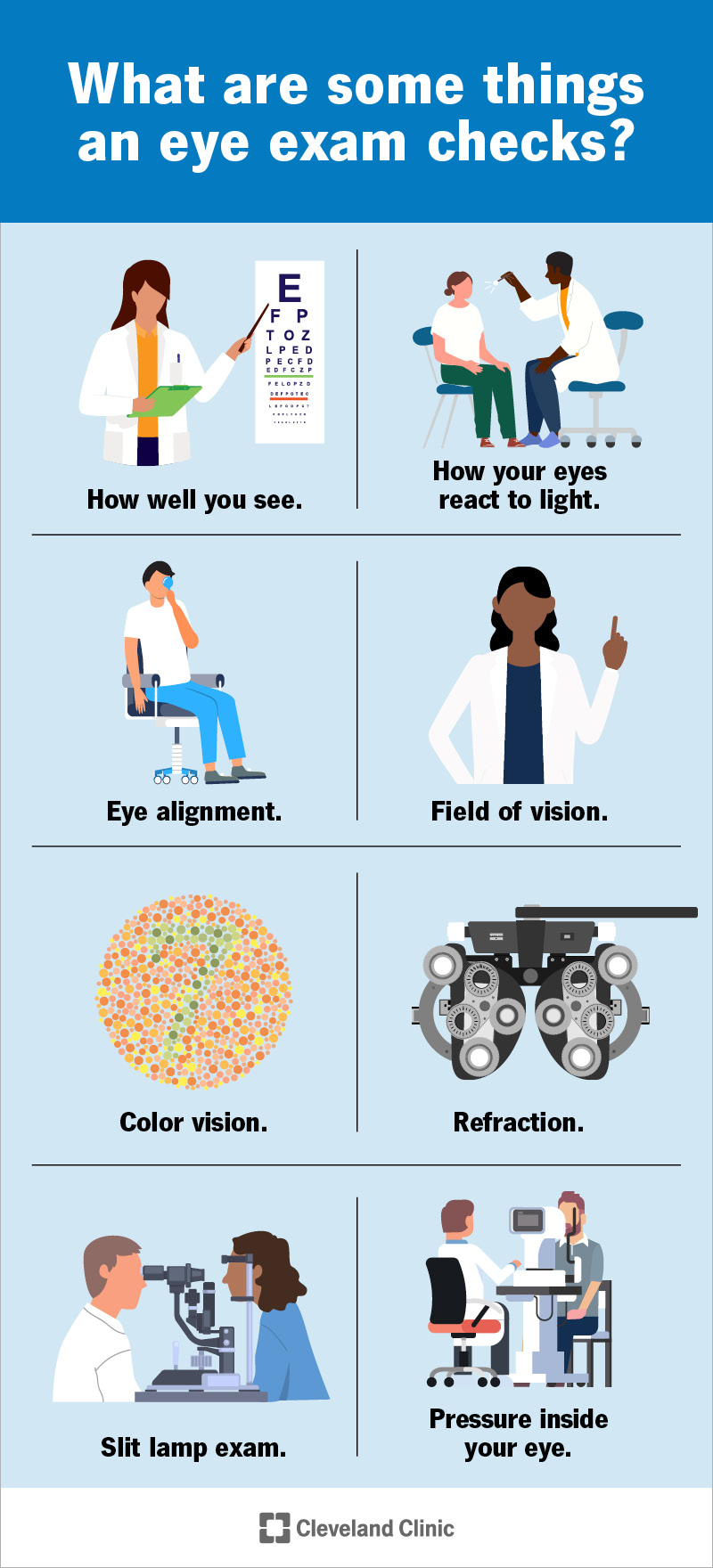
Image source: my.clevelandclinic.org
We pair advanced diagnostic technology with San Diego’s largest curated collection of independent designer frames to help you SEE GOOD All the Time. By combining medical precision with an artisanal approach to eyewear, we ensure your glasses are a true reflection of your personality. Whether you need high-performance lenses for work or a bold fashion statement, our team is dedicated to finding the perfect match. Experience the difference of a clinic that values both clinical excellence and high-end aesthetics in the heart of San Diego.
Frequently asked questions
What happens during an eye examination procedure?
The process begins with a health history and visual acuity check to establish a baseline. Diagnostic tests like tonometry and refraction determine your eye health and prescription needs. Finally, a physical evaluation of the eye structures is performed using a slit lamp to check for any underlying issues or abnormalities.
How long does a standard eye examination take?
A comprehensive exam typically involves several clinical phases to ensure a thorough assessment. The duration depends on the complexity of your vision needs and whether dilation is required to view the retina. At EYE EYE, we prioritize a thorough, unhurried experience to ensure personal care for every patient who walks through our doors.
Will I be able to drive home if my eyes are dilated?
Dilation causes temporary light sensitivity and blurred near vision for several hours. Many patients feel comfortable driving with high-quality sunglasses, but others prefer a designated driver for safety. Some providers offer advanced imaging options that may reduce the need for traditional dilation drops in certain circumstances.
Does an eye exam hurt?
Standard examinations are non-invasive and painless. Some tests, like the gentle puff of air for pressure checks, may cause a brief surprise but no discomfort. Independent practices often utilize equipment designed to help maintain patient comfort and support a professional, calm clinical environment.
To experience a comprehensive and personalized approach to your vision health, call us at 619-815-5864 or visit our location at 2765 Fifth Ave, San Diego, CA, 92103. You may also Appointments.
This information is for educational purposes only. Please consult with a qualified clinician for a diagnosis or treatment plan specific to your situation.