Last updated September 16, 2026
An eye test chart online free is a digital tool designed for vision screening, not medical diagnosis. While these charts help identify basic clarity issues by measuring how well you see letters at a distance, they cannot determine a prescription or detect underlying ocular health conditions like glaucoma.
Table of contents
- Key takeaways
- The Snellen Chart and Home Vision Screening
- Understanding Visual Acuity and the 20/20 Standard
- Why Digital Screenings Are Not Comprehensive Exams
- When a Home Eye Test Is Not Enough
- From Screening to Personalized Vision Styling
- Frequently asked questions
Key takeaways
- Professional evaluation needed. A 20/25 vision result or worse indicates a need for a professional eye evaluation.
- Screening limitations. Digital screenings are affected by monitor brightness, blue light, and screen resolution.
- Setup requirements. Standard Snellen charts require a specific viewing distance and paper size to ensure the letters are viewed at the correct scale.
- Pediatric standards. A HOTV chart using shapes is the appropriate screening tool for young children.
- Health vs. Acuity. Vision screenings measure acuity but do not assess internal eye health or optic nerve integrity.
The Snellen Chart and Home Vision Screening
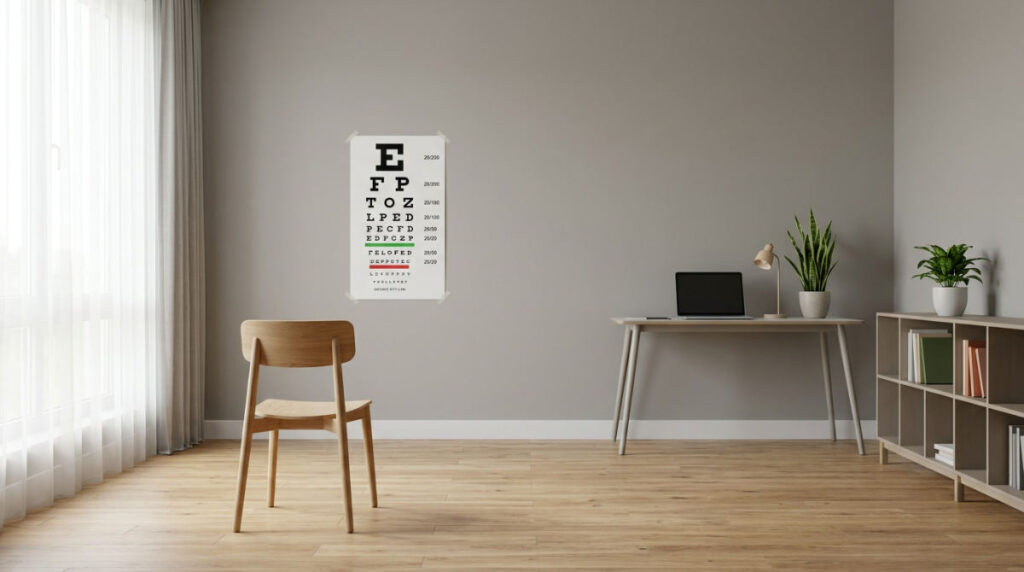
The Snellen Chart is the traditional tool for measuring visual acuity. It consists of rows of capital letters that shrink in size as you read toward the bottom. If you want a real result, skip the digital screen. Pixels vary. Glare skews data. You are better off using a printable version on paper. Print it at a 100% scale. Then, tape the chart on a wall at eye level and stand at the exact distance specified in the instructions. Bright, even lighting is mandatory here. You want to mimic the controlled environment of a professional office.
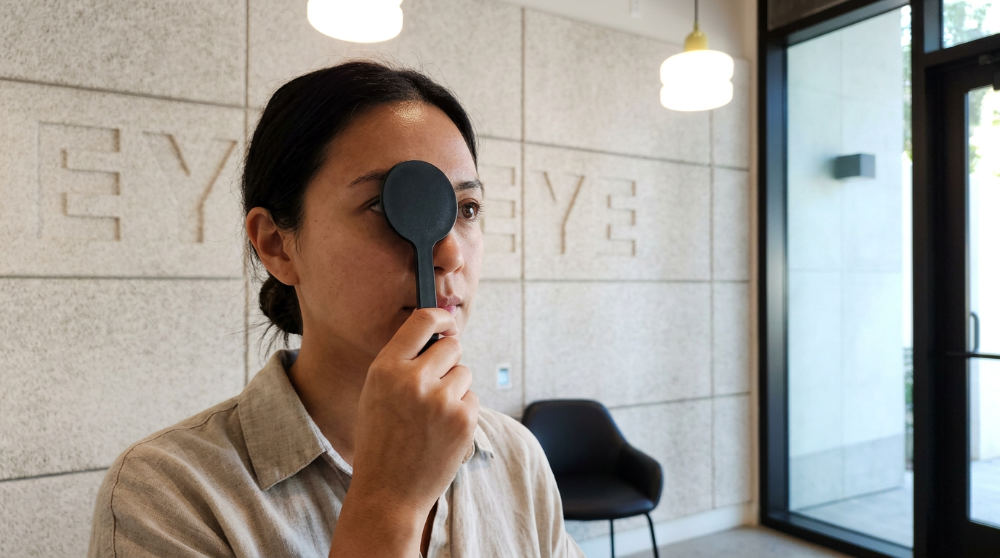
Test one eye at a time. Use a paper cup or your palm to cover the other. Do not press on the eyelid. Even light pressure can temporarily blur your vision and ruin the test. Read down the chart. Stop when you can no longer tell the letters apart. This is your baseline. If you clearly read the 20/20 line, your distance vision is standard. If you struggle with the 20/40 line, you see at 10 feet what a person with standard vision sees at 20 feet. That means it is time for a professional exam. The Safe Eyes America Eye Test provides the specifics for setting up your environment to get a reliable screening.
Understanding Visual Acuity and the 20/20 Standard
Visual acuity is a measure of clarity or sharpness. It is usually expressed as a fraction like 20/20. This score is a reference point for what a person should see from 20 feet away. It measures clarity. However, it ignores how your eyes function and their internal health. A 20/40 score means you must be 20 feet away to see what others see from 40 feet. Data from MDCalc shows that visual acuity worse than 20/25 requires an evaluation by a licensed optometrist to check for necessary corrections.
Pediatric Tip: For children who do not know their letters, a HOTV chart is a specialized vision chart for young children using specific shapes rather than the full alphabet.
Toddlers use a HOTV chart. This swaps letter rows for shapes like circles or squares. It lets a child communicate through recognition. At EYE EYE, we believe understanding these numbers is the first step toward our goal to help you "SEE GOOD All the Time." A screening helps you monitor changes, but it is just one data point. It is not the whole picture.
Why Digital Screenings Are Not Comprehensive Exams
Online charts measure distance clarity. They do not provide a prescription for glasses or contact lenses. While a digital eye test chart online free is convenient, these tools rarely account for blue light interference or fluctuating monitor brightness. Research from MDCalc suggests that current smartphone apps for Snellen acuity are rarely accurate within even one line of formal testing.
Accuracy Warning: Never use a digital screen result to buy prescription glasses; only a licensed optometrist can provide the medical refraction needed for accurate lenses.
A home chart cannot detect glaucoma. This group of conditions is associated with damage to the optic nerve. A letter chart is not designed for that assessment. You need specialized diagnostic equipment to view the internal structures of the eye. A home test feels clinical, but a visit to our Bankers Hill clinic offers an Eye Spa experience for total wellness. We use advanced diagnostic technology that home charts cannot replicate. We support your eye health from front to back.
When a Home Eye Test Is Not Enough
Never substitute home screenings for medical care if you experience sudden vision loss or eye pain. Frequent flashes of light are also a red flag. Those are emergencies. Get help. Even a passing score on a Snellen chart doesn’t rule out the need for a professional exam if you suffer from chronic headaches or digital eye strain. These symptoms often point to issues with how the eyes work together. You should learn what to expect during a professional exam because licensed professionals check structures a chart cannot see. We look at the optic nerve and blood vessels.
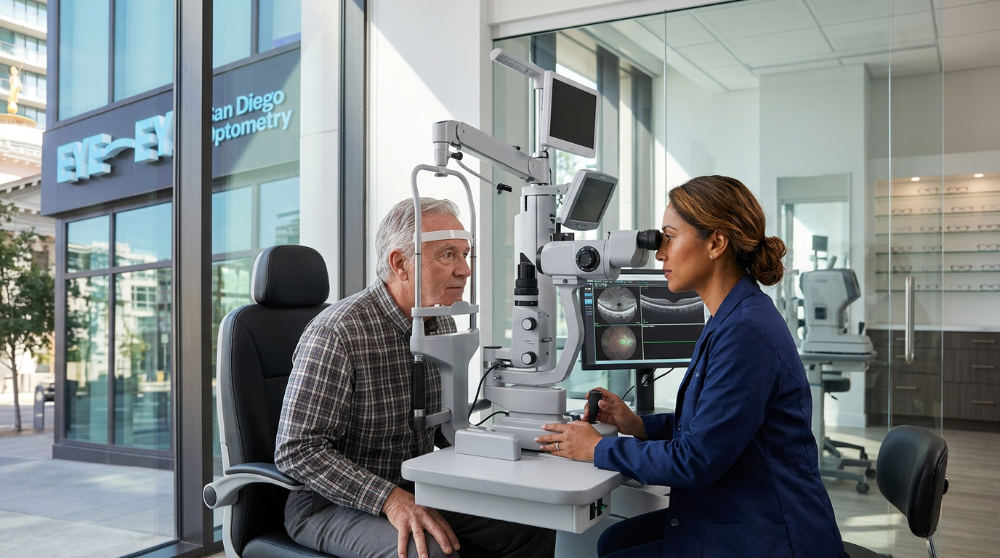
Self-screening is a helpful start, but it can’t replace advanced diagnostic tools. A person might read 20/20 at home while living with elevated internal eye pressure. Only a professional detects that. If you have diabetes or a family history of eye disease, you need medical oversight. Period. If your home test shows any inconsistencies, schedule an eye appointment online to get a definitive assessment from an optometrist who can perform medical exams beyond basic acuity screenings.
From Screening to Personalized Vision Styling
If an exam confirms you need correction, find high-quality solutions that fit your personality. Move past the screening. Explore independent designer frames to turn a medical necessity into a style statement. At EYE EYE, we curate a unique collection of global eyewear. Corporate chains and apps cannot offer these brands. We focus on craftsmanship, artistic design, and unique materials.
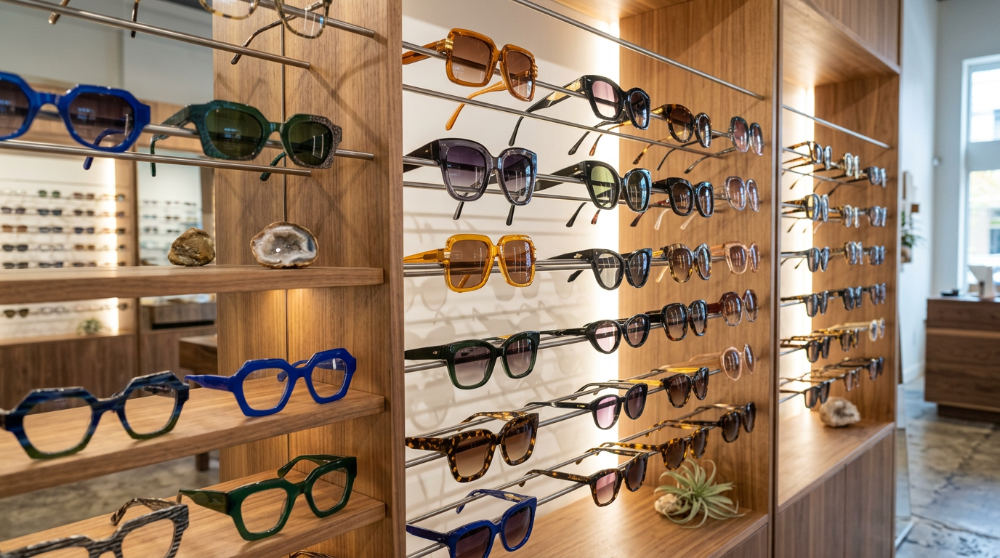
If your home screening shows blurriness, or if you just want to be proactive, a professional session is the only safe path. We provide care tailored to your lifestyle. We help you whether you sit behind a computer or need specialized lenses for the San Diego sun. Prioritize your vision today. Ensure you continue to "SEE GOOD All the Time" with independent care that addresses your eyes as part of your overall well-being.
Frequently asked questions
Can I use an eye test chart online for free?
Yes. Digital and printable versions work for preliminary home screenings. Use them to track vision changes between professional visits or as a quick check if you notice new blurriness. They are not a replacement for medical examinations.
Are online eye charts accurate compared to professional exams?
They are generally less accurate. Screen size variations and home lighting cause inconsistencies. Professional exams use calibrated projectors and specialized lenses. Clinical research shows smartphone apps often vary by at least one full line of acuity compared to controlled tests.
Does my monitor brightness affect the results of a digital eye test?
Yes. Excessive brightness or glare can artificially change your ability to see small letters. Backlit screens do not mimic the matte surface of professional charts. You need standardized lighting and a non-glare surface for an accurate measurement.
Can an online eye chart tell me my exact prescription for glasses?
No. A chart only measures acuity (how well you see). It does not measure refractive errors like nearsightedness, farsightedness, or astigmatism. Determining a prescription requires a refraction test performed by a licensed professional using a phoropter.
What should I do if I pass the home chart test but still have headaches?
Headaches often indicate eye strain or binocular vision issues that a letter chart cannot catch. Schedule a comprehensive exam to rule out neurological or muscular issues. A professional assesses how your eyes work together, not just how they see individually.
If your home screening shows any blurriness or if you simply want to ensure you are "SEEING GOOD," call 619-815-5864 to book a professional exam and styling session. You can also visit our location at 2765 Fifth Ave, San Diego, CA, 92103.
This information is for educational purposes only and does not constitute medical advice, diagnosis, or treatment. Always seek the advice of a qualified healthcare provider with any questions you may have regarding a medical condition.